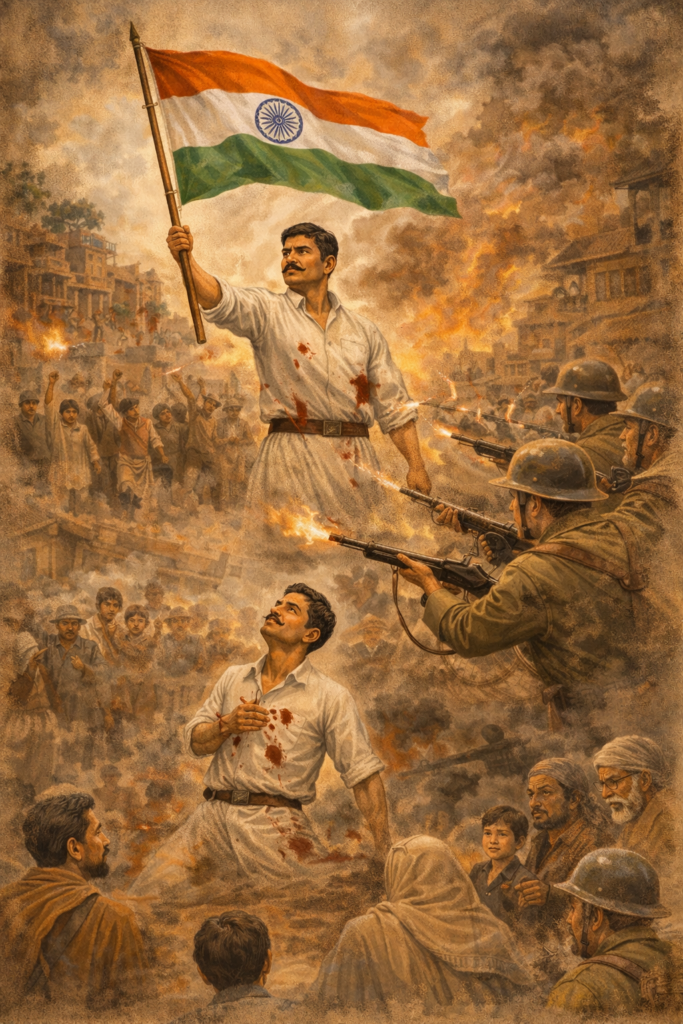
Martyr Jamuna Prasad Tripathi

The Brave Heart of Bewar (Mainpuri, Uttar Pradesh)

Martyr Jamuna Prasad Tripathi at a Glance

  • Name: Jamna (Jamuna) Prasad Tripathi

  • Father’s Name: Ayodhya Prasad Tripathi

  • Native Place: Bewar, District Mainpuri, Uttar Pradesh

  • Contribution: Front-ranking freedom fighter in the 1942 Quit India Movement at Bewar

Martyr Jamuna Prasad Tripathi was one of the three immortal heroes of Bewar who laid down their lives on 15 August 1942 while facing British bullets with the Tricolour in their hands.
A resident of Bewar in Mainpuri district and son of Pandit Jamuna Prasad’s father, Pandit Ayodhya Prasad Tripathi, he chose sacrifice over silence during the Quit India Movement and became a symbol of courage for generations.

Frontline freedom fighter of Bewar

Led and participated in Quit India Movement protests at Bewar (Mainpuri, Uttar Pradesh), facing British repression without fear.

Martyr of 15 August 1942

Attained martyrdom in police firing near Bewar police station while moving with the Tricolour and patriotic procession.

Eternal symbol at Shaheed Mandir

Remembered along with Krishna Kumar and Sitaram Gupta in the unique Shaheed Mandir and annual Shaheed Mela of Bewar.

Family Roots and Personal Life of Martyr Jamuna Prasad Tripathi

Mr. Tripathi was my revered father. My grandfather, Shri Ayodhya Prasad Tripathi, had moved from Kursi Kakwan (Kanpur) to live in his maternal grandparents’ village. He worked as an accountant and general agent for the respected landlord Pandit Shri Gopal Dixit of Bevar. My grandfather was extremely simple, saintly, and soft-spoken. The residents of Bevar held him in deep respect and reverence. Like my grandfather, my grandmother was also a very kind and tolerant woman.

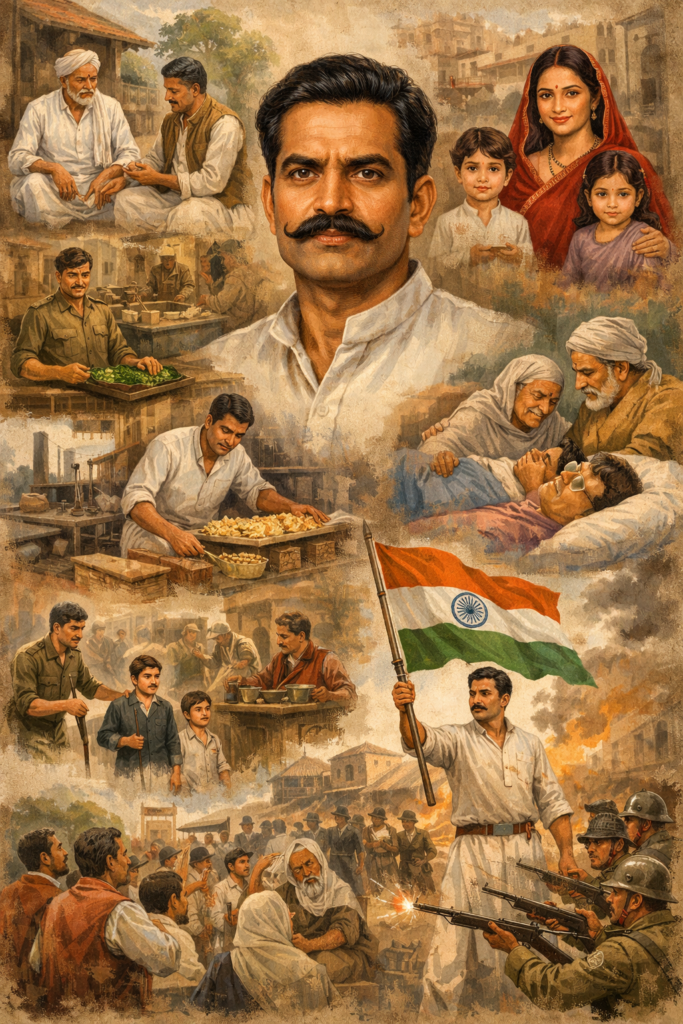
My grandfather had three children, two sons and one daughter. My grandmother passed away when her children were still young. They were later raised by another grandmother. My uncle, Shri Jawaharlal Tripathi, joined the army in his youth and later worked as an agent for another landlord in Bevar, Lala Bangalilal. My father was the youngest of his two brothers. From childhood, he appeared extremely gentle, simple, hardworking, virtuous, humorous, and brave. He received only elementary education at school, but he was rich in practical experience. His personality was very attractive. In his youth, he paid special attention to his health. He was naturally endowed with a strong and robust physique. His high forehead, large, bright eyes, and thick, upward-curling mustache still paint a vivid picture of his dignified personality in my memory. My father’s pleasant and serious voice, his impressive, sweet smile, and his polite, restrained behavior had a unique charm. Anyone who met him even once became his friend.

My father supported his family partly through farming and partly through a sweet shop. He was married at the age of 25. My mother, Shrimati Vidyadevi, was the daughter of Shri Chhotelal Pandey, a resident of Kinhavar village in Mainpuri district. My revered mother was a very humble, virtuous, and extremely beautiful woman. My grandmother used to say that in her time, my mother was considered the most beautiful daughter-in-law in our town. Because of her charming beauty and exceptional qualities, her family members affectionately preferred to call her simply “Devi” (Goddess) instead of Vidya Devi.

My mother gave birth to four children. Our eldest sister and youngest brother passed away in childhood. They seemed to have an almost obsessive need for purity. Suffering from a severe stomach ailment, my mother passed away at the age of 24, leaving behind her two young children. At the time of my mother’s death, my younger brother Rajaram was only 6 years old. Afterward, my father took on the responsibilities of both mother and father in raising us two brothers.
Struggles, Sacrifices, and Awakening of a Freedom-Seeking Father

My father loved my mother dearly. After the loss of his beloved wife, he faced immense difficulties in raising us two children, her last remaining legacy. At one point, he was completely destitute. During that time, we lived with our maternal grandparents for about two years. We were fortunate to experience the loving care of our grandmother. My father started working as a laborer in a textile mill in Kanpur. There, he earned a living by working at the mill and sometimes by selling betel leaves and tobacco. During our time at our grandmother’s house, my brother Raja suffered from a serious illness, and a stroke left half of his body paralyzed. Despite extensive treatment, the weakness in his leg could not be cured. This situation deeply troubled my father. His greatest concern was for his children. He returned to Bewar and reopened his sweet shop. Until his last moments, he continued to raise us two brothers with the income from that shop. In his lifetime, my father gained profound experience of life as a farmer, a laborer, and a shopkeeper. He had a deep connection with the painful realities of poverty. He often discussed the suffering of the poor, working-class people, the country’s subjugation, and the struggles and sacrifices made for national independence, narrating poignant stories and inspiring anecdotes. I, too, listened with great interest and concentration, and reflected on them deeply.

When the nationwide wave of the August Revolution swept across our district of Mainpuri, my father was not untouched by it. He stepped forward with pride and, at the age of 40, driven by a profound desire to fight for the progress of the country and society, and to lay down his life for national freedom, he faced the brutal bullets of the British regime with his head held high, joining the ranks of the martyrs.

Visit, reflect, and remember

Visit Shaheed Mandir during Shaheed Mela or any time of the year to offer flowers and prayers.

Offer Your Tribute

Visit Shaheed Mandir during Shaheed Mela or on any day of the year to offer flowers, light a lamp, and bow before the martyrs’ statues.

Teach Through Presence

Bring students and young people so they can stand face to face with the heroes of India’s freedom—not just read about them in textbooks.

Spread Their Story

Share photos, stories, or memories from your visit and help more people discover this unique “temple of martyrs” and the sacrifices it honours.

A Hall of Heroes

Key highlights of what you experience inside Shaheed Mandir.

Generations Touched
0 +
Statues of Freedom Fighters
0 +
Years of Legacy
0 +
Days to Salute Martyrs
0 +